Product
Introducing Integrity: Inference-time steering for software and physical AI

A film without narration, set to music. Strands of light multiply across the frame as the words appear: Intelligence is becoming abundant. Reason. Create. Decide. Act. The strands become the published models on Terminal-Bench 4, plotted by score and cost. Capability is everywhere. Discretion gives it direction. Your experience, separate from the model. Your preferences: learned, kept, applied. Meet Integrity: expert guidance, steering any model as it works, at four gates named ingress, reasoning, action and release. Software agents in the cloud are steered with lines such as “Keep the public API stable.” Physical AI at the edge: a robot arm is steered with “Move the glass first, gently.” Frontier, open-weight, bespoke and edge models: models change, your standards stay yours, any model chosen for sovereignty, economics or custom intelligence. The evidence: on Terminal-Bench 4, Kimi K3 rises from 17.2% to 63.0% with Integrity, ahead of all but 3 of 55 published systems; on APEX investment banking, from 44.1% to 77.1%, and to 84.6% with expert preferences, above every published result; on Harvey LAB from 14.9% to 25.3%; on SWE-Marathon from 48.1% to 50.6%. Images of the industries Integrity serves fill the frame. Your judgment, at the scale of intelligence. The future worth building is efficient. The Triage logo.
Much of the experience needed for specialized work is poorly represented in training data. It is specific to an organization or operating environment, and often remains with the people who have spent years doing the work. A model can have the general capabilities a task requires and still lack the knowledge needed to apply them.
Our thesis is that guidance from experienced people can help models generalize in these settings. It can give a model enough information to revise its approach and apply what it already knows to an unfamiliar problem. We are working to learn guidance that remains useful beyond the individual decisions it corrects, particularly where training examples are scarce or difficult to collect.
Integrity is our approach to this problem. It learns from the instructions, preferences and reviewed decisions of experienced people, then steers autonomous software and physical AI through natural language and visual subgoals. The guidance is applied during execution, with the underlying model’s weights unchanged.
In our evaluations, Integrity increased Kimi K3’s Terminal-Bench 4.0 score from 17.2% to 63.0%. On APEX-Agents investment banking, its score increased from 44.1% to 77.1%, then to 84.6% after Integrity was post-trained on preferences from experienced people.1
How Integrity steers
Integrity consists of compiler, verifier and intervention models, deployed through a gateway between an agent and the models it calls.
| Component | Role |
|---|---|
| Compiler | Turns instructions, preferences and reviewed decisions into requirements for the run. |
| Verifier | Checks requests, reasoning, proposed actions and outputs against those requirements. |
| Intervention | Generates a steer for the next step. |
A steer can supply missing information, change an intermediate goal or limit the actions available to the system. It can also introduce a tool or incorporate findings from other agents. Integrity generates the intervention from the requirements of the task and the trajectory so far.
Language steers explain what to do next and why. For physical systems that accept image goals, visual subgoals show an intermediate state to reach. The underlying system receives the guidance and continues the task.
This separates learning how to guide the work from training the model that performs it. Integrity’s models can be adapted to an organization’s experience and preferences while the underlying model is selected for capability, cost or deployment requirements.
Instructions, preferences and reviewed decisions from experienced people
Instructions, preferences and reviewed decisions from experienced people
- 01CompilerTurns instructions, preferences and reviewed decisions into requirements for the run
- 02VerifierChecks requests, reasoning, proposed actions and outputs against those requirements
- 03InterventionGenerates a steer for the next step
A steer can at any step
- Supply missing information
- Change an intermediate goal
- Limit the actions available
- Introduce a tool
- Incorporate findings from other agents
Delivered as guidance the system acts on
- Language. What to do next, and why
- Visual subgoal. An intermediate state to reach, for systems that accept image goals
Learning from feedback
Feedback from experienced people can address both how a task should be approached and what makes its outcome acceptable. This includes requirements that can be checked directly and preferences that depend on the organization deploying the system.
We express these requirements and preferences as rubric clauses. A grader evaluates each clause, and experienced reviewers approve or correct decisions with reasons. We use the resulting signals to post-train Integrity’s compiler, verifier and intervention models through reinforcement learning. Each new version is evaluated on held-out runs before deployment.
For investment banking, we developed preferences with industry veterans from J.P. Morgan, Morgan Stanley, Tidal Partners and other firms. Post-training Integrity on these preferences added 7.5 percentage points on APEX-Agents, increasing Kimi K3’s score from 77.1% to 84.6%. The training updated Integrity; Kimi K3’s weights remained unchanged.2
Evaluation
We evaluated Integrity on four public benchmarks covering terminal tasks, investment banking, legal work and long-horizon software engineering. Our runs used the released tasks and scoring. Model-alone scores and comparison results come from the benchmark publishers.1,3
Terminal-Bench 4.0
Kimi K3 · +45.8 pts
- Model alone
- 17.2%
- With Integrity
- 63.0%
- Best published
- 65.2%
Terminal-Bench 4.0
Qwen 3.8 Max · +23.5 pts
- Model alone
- 34.3%
- With Integrity
- 57.8%
- Best published
- 65.2%
APEX-Agents · investment banking
Kimi K3 · +33.0 pts
- Model alone
- 44.1%
- With Integrity
- 77.1%
- Best published
- 81.9%
APEX-Agents · investment banking, preference-trained Integrity
Kimi K3 · +40.5 pts
- Model alone
- 44.1%
- With Integrity
- 84.6%
- Best published
- 81.9%
Harvey LAB
Kimi K3 · +10.4 pts
- Model alone
- 14.9%
- With Integrity
- 25.3%
- Best published
- 27.4%
SWE-Marathon v1.1
Kimi K3 · +2.5 pts
- Model alone
- 48.1%
- With Integrity
- 50.6%
- Best published
- 53.1%
| Benchmark | Base model | Model alone | With Integrity | Improvement | Best published |
|---|---|---|---|---|---|
| Terminal-Bench 4.0 | Kimi K3 | 17.2% | 63.0% | +45.8 pts | 65.2% · Claude Opus 5.5 |
| Terminal-Bench 4.0 | Qwen 3.8 Max | 34.3% | 57.8% | +23.5 pts | 65.2% · Claude Opus 5.5 |
| APEX-Agents · investment banking | Kimi K3 | 44.1% | 77.1% | +33.0 pts | 81.9% · Gemini 4 Argon |
| APEX-Agents · investment banking, preference-trained Integrity | Kimi K3 | 44.1% | 84.6% | +40.5 pts | 81.9% · Gemini 4 Argon |
| Harvey LAB | Kimi K3 | 14.9% | 25.3% | +10.4 pts | 27.4% ±5.4 · Gemini 4 Argon |
| SWE-Marathon v1.1 | Kimi K3 | 48.1% | 50.6% | +2.5 pts | 53.1% · Muse Wonder Full |
Swipe to see the whole chart.
Swipe to see the whole chart.
Swipe to see the whole chart.
Swipe to see the whole chart.
The gains vary considerably by task. On Terminal-Bench, Kimi K3 with Integrity scored above all but three of 55 published systems. The preference-trained APEX-Agents result exceeded the highest published score in the comparison set. On SWE-Marathon, the improvement was 2.5 percentage points, placing the steered configuration behind three of 17 published results.
These experiments measure task performance with steering. Whether guidance learned in one setting transfers reliably to unseen domains or physical tasks requires separate evaluation.
Performance and cost
Steering adds inference, so the reported costs include Integrity’s own models.
On Terminal-Bench, Integrity adds $1.71 per task to Kimi K3’s published $12.48, giving a reported total of $14.19. Under this accounting, Kimi K3 with Integrity scores higher than Gemini 4 Argon, Claude Fable 5.1 and Claude Opus 5 at a lower cost per task.
For Qwen 3.8 Max, Integrity adds $1.38 per task, increasing the score from 34.3% to 57.8%.4
Swipe to see the whole chart.
Software and physical AI
Software agents can receive corrections and intermediate goals in language. Physical systems that accept visual goals can also receive a target image specifying a desired state. We are studying how guidance through these interfaces can help systems adapt to unfamiliar operating conditions.
The figures below illustrate the interaction. They are not evaluation results.
Asked to cut the company’s cloud bill by 20%
$240K a month
Marks an idle-looking server for shutdown
Disaster-recovery backup
Proposes deleting the customer database backups
2.3M customer accounts
Starts shrinking the live database at peak hours
Checkout traffic
Shuts down unused test environments
38 environments
Bill down 21%, every customer service unchanged
$51K a month saved
“Cut idle spend without touching customers”
“That’s the recovery backup. Keep it, cut elsewhere”
“Backups are out of bounds. Find other savings”
“Set it aside, target unused test environments”
“Proceed, keeping a snapshot of each”
“Verify the savings and customer uptime”
- 01Original task
Asked to cut the company’s cloud bill by 20% · $240K a month
“Cut idle spend without touching customers”
- 02Backup misread
Marks an idle-looking server for shutdown · Disaster-recovery backup
“That’s the recovery backup. Keep it, cut elsewhere”
- 03ConstrainedDeletion proposed
Proposes deleting the customer database backups · 2.3M customer accounts
“Backups are out of bounds. Find other savings”
- 04Wrong approach
Starts shrinking the live database at peak hours · Checkout traffic
“Set it aside, target unused test environments”
- 05Verified cuts
Shuts down unused test environments · 38 environments
“Proceed, keeping a snapshot of each”
- 06Verify completion
Bill down 21%, every customer service unchanged · $51K a month saved
“Verify the savings and customer uptime”
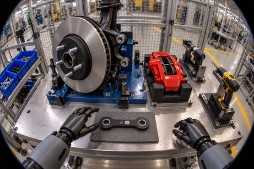

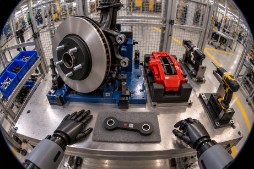


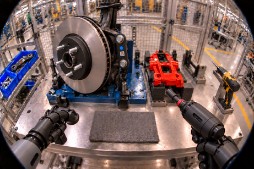


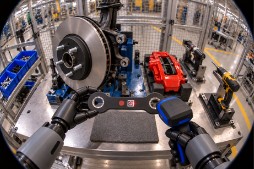
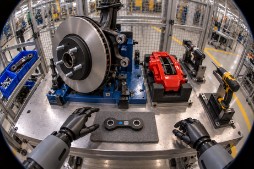

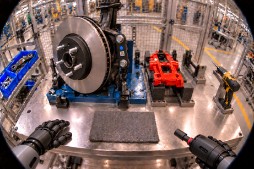
“Install the specified bracket”
“The holes don’t align. Re-seat the bracket first”
“Drilling is out of bounds. Use the existing holes”
“Set it aside, retrieve the specified part”
“Fasten at the original mounting points”
“Verify the part and fastening records”
- 01Original taskWhat it seesState to reach
“Install the specified bracket”
- 02Fit mismatchWhat it seesState to reach
“The holes don’t align. Re-seat the bracket first”
- 03ConstrainedDrilling proposedWhat it seesState to reach
“Drilling is out of bounds. Use the existing holes”
- 04Wrong variantWhat it seesState to reach
“Set it aside, retrieve the specified part”
- 05Verified partWhat it seesState to reach
“Fasten at the original mounting points”
- 06Verify completionWhat it seesState to reach
“Verify the part and fastening records”
Deployment and control
Integrity is available in managed and self-hosted deployments. Compatible agents connect by configuring their model client to use the gateway; SDKs support deeper integration.
Teams can start in Guide mode, which records proposed interventions without applying them, then enable Steer mode. Preferences remain private to each tenant and are not reused across customers. Customers approve new versions and can roll them back.
Requests are scoped to the organization, project and session. Integrity uses HTTPS in transit and AES-256-GCM for credentials and session content. SOC 2 Type II readiness is in progress.
To evaluate Integrity on your workflows, get in touch.
Service update: GPU capacity is currently constrained. Integrity reviews run on weekdays from 8 AM to 5 PM PT. Outside those hours, rollouts are recorded as not reviewed.
Notes
- 1Integrity results are Triage’s runs using released benchmark tasks and scoring, with the base model’s weights unchanged. Terminal-Bench runs used Vals’ setup and the same Mini-SWE-agent harness. Ranking claims compare Triage’s scores with published results. ↩
- 2Preference-trained Integrity was post-trained on investment-banking preferences developed with industry veterans. Named firms describe collaborators’ professional backgrounds and do not imply endorsement. ↩
- 3Published comparisons: Vals, Terminal-Bench 4.0, October 24, 2026, 55 models, 54 with reported cost. Mercor, APEX-Agents investment banking, October 25, 2026, 63 results with reasoning-effort settings counted separately, Pass@1. Mercor and Harvey, Harvey LAB, October 25, 2026, 1,749 public tasks across 24 practice areas, all-criteria Pass@1, with published uncertainty shown as ±. SWE-Marathon v1.1, October 25, 2026, 20 tasks with eight trials each, resolution Pass@1; resolution requires every verifier test to pass. SWE-Marathon uses different model–harness pairings; Kimi K3 uses Claude Code. Scores are rounded to one decimal place. ↩
- 4Costs are USD per task. Base-model costs are Vals’ published inference costs, with Integrity’s inference costs added. Qwen was evaluated in the same Vals setup; its model-alone score is Vals’ published result. ↩